
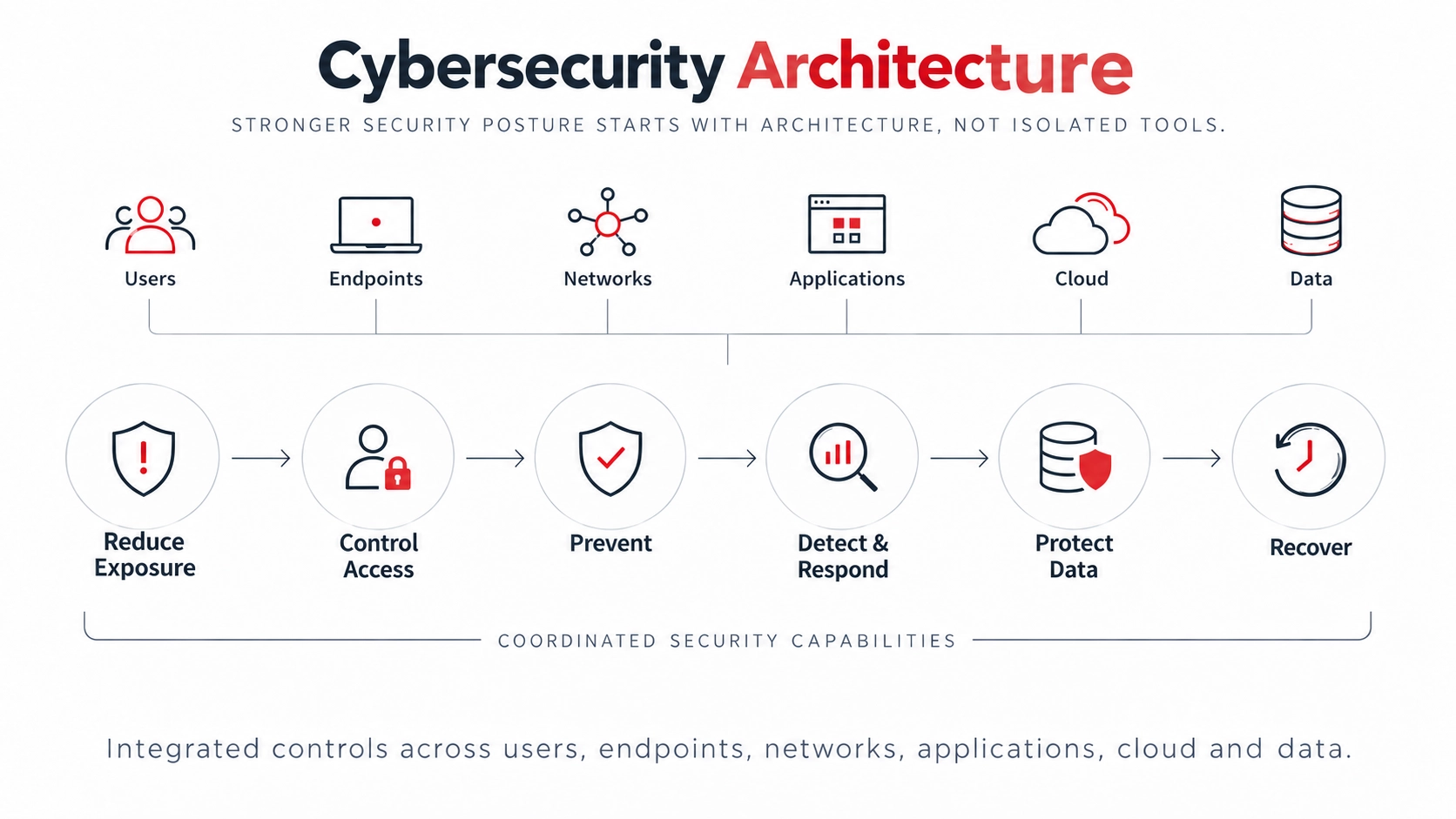
Effective cybersecurity depends on how individual controls work together. Protecting users, devices, applications, data and networks as separate problems can create gaps, overlapping tools and operational complexity.
Hararei helps organizations design and implement more coherent security architectures that connect prevention, access control, visibility, detection, response and resilience. The objective is to reduce exposure, simplify operations and ensure that security controls support the way the business actually operates.
That may involve modernizing secure access, strengthening endpoint protection, improving network and branch security, protecting sensitive data, introducing managed detection and response, or redesigning how security capabilities are integrated across the environment.
One of the most effective ways to improve cybersecurity is to reduce the number of opportunities an attacker has to gain an initial foothold. That means identifying unnecessary exposure, removing known weaknesses and limiting access to systems, applications and services that do not need to be broadly reachable.
Hararei helps organizations reduce attack surface across endpoints, users, applications, networks and cloud environments. This can include improving patch and vulnerability management, eliminating unnecessary internet exposure, tightening access paths, reducing implicit trust and removing legacy infrastructure that increases risk without delivering corresponding business value.
Identify vulnerable software and reduce the window of exposure by applying security updates and remediation before known weaknesses can be exploited.
Limit directly exposed applications and services, and replace broad network access with more controlled access to specific resources.
Reduce implicit trust between users, devices and network segments so that compromise of one element does not automatically create access to others.
Retire redundant infrastructure and overlapping controls that increase complexity, create configuration gaps and make the environment harder to secure.
Reducing exposure does not depend on a single security product. It is an architectural discipline that combines vulnerability reduction, access control, segmentation, modernization and operational hygiene to make the environment inherently more difficult to attack.
Users now connect to applications and data from offices, homes, branches, mobile networks and unmanaged locations. Security therefore has to follow the user rather than depend on a traditional network perimeter.
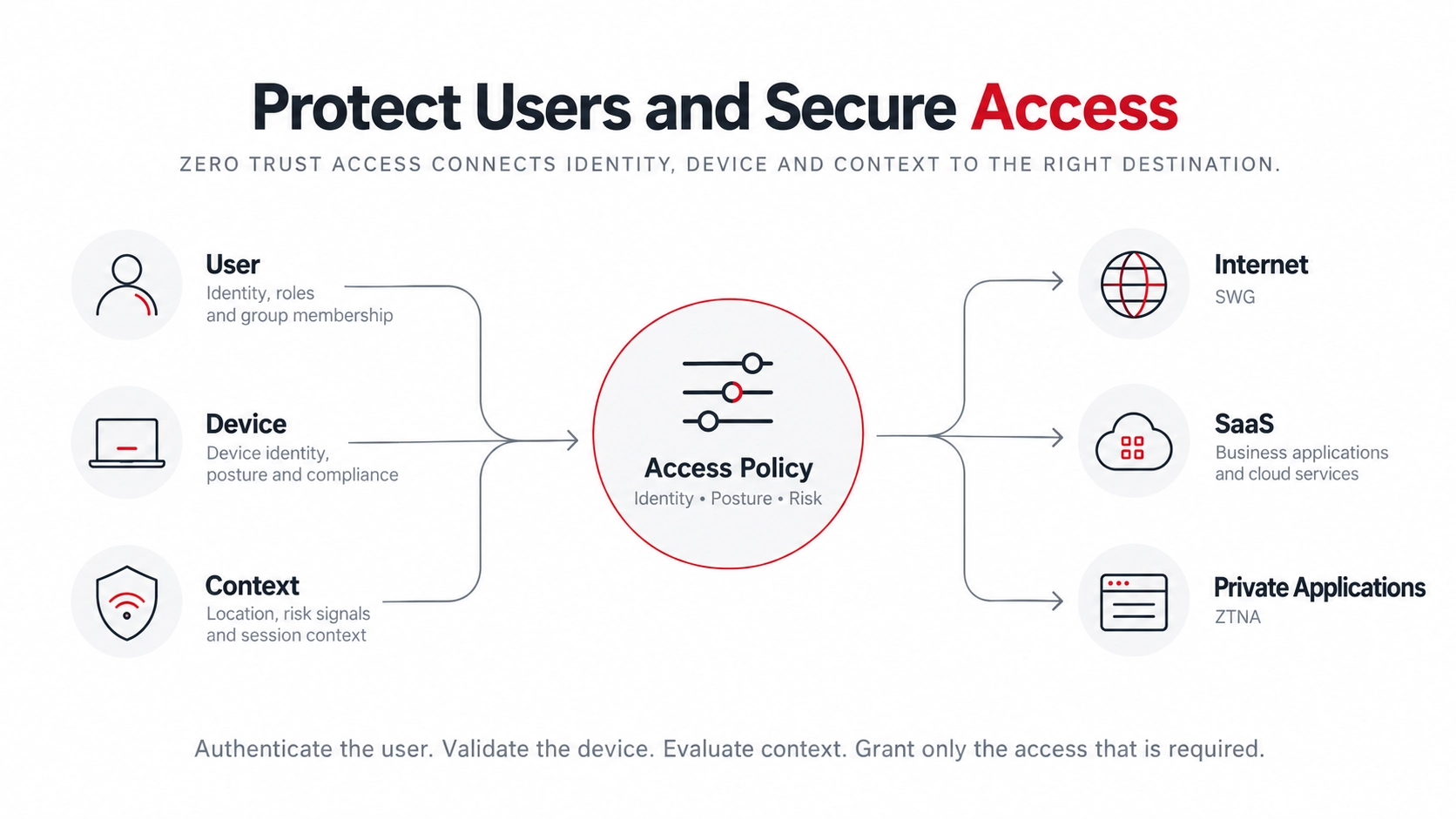
Hararei helps organizations modernize access by applying identity, device posture, context and policy to determine who should connect, to what, and under which conditions. This can reduce reliance on broad network access while improving both security and user experience.
Protect users from malicious websites, unsafe content, phishing, malware and other internet-borne threats while applying consistent policy wherever users connect.
Grant users (internal and contractors) access to specific private applications rather than connecting them to the underlying network. Access can be evaluated continuously using identity, device posture and policy.
Require devices to meet defined security standards before allowing access, such as managed status, endpoint protection, patch level, encryption or other posture requirements.
Replace legacy VPN and perimeter-based remote access with a simpler architecture that reduces exposed infrastructure, removes broad network access and improves the experience for remote and third-party users.
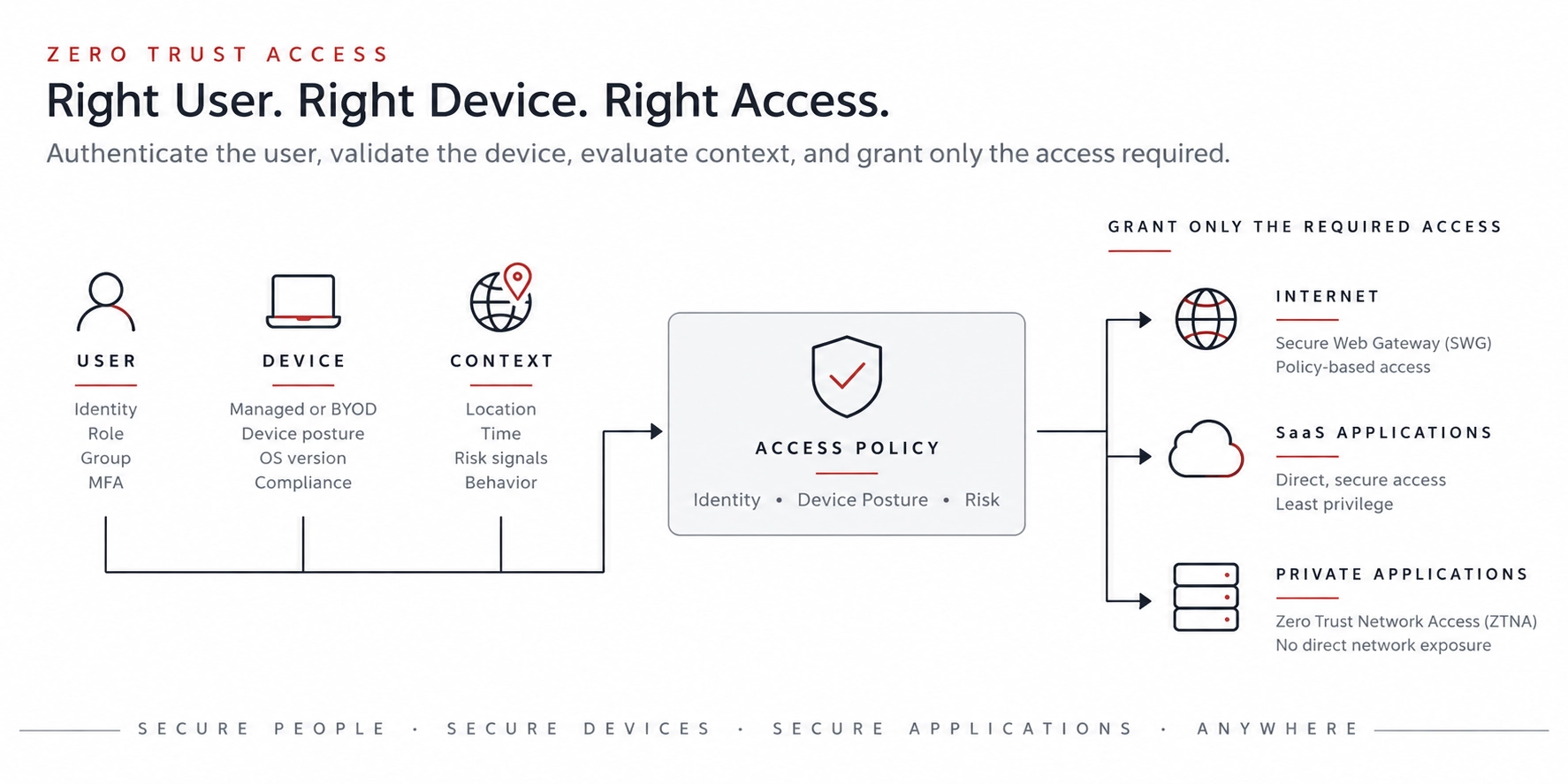
The goal is to make access more precise: authenticate the user, validate the device, evaluate the context and provide only the access required for the task.
Endpoints remain one of the most common paths into the enterprise. Attackers target user devices and servers through malicious files, exploited software, credential theft and techniques designed to evade traditional signature-based controls.
Hararei helps organizations strengthen endpoint security by combining prevention, vulnerability reduction, behavioral detection and managed investigation. The objective is to stop as much malicious activity as possible before execution, while maintaining the visibility and response capability needed when suspicious activity does occur.
Use advanced endpoint prevention to identify and block known and previously unseen malicious code before it can execute and establish a foothold.
Identify and remediate vulnerable software so attackers have fewer exploitable weaknesses available on desktops, laptops and servers.
Monitor endpoint activity for behaviors associated with compromise, persistence, credential abuse and other malicious techniques that may bypass preventative controls.
Give security teams and managed analysts the telemetry needed to investigate suspicious activity, understand scope and take appropriate response actions.
Effective endpoint security therefore goes beyond replacing antivirus. It combines prevention, exposure reduction, detection and response to reduce both the likelihood and potential impact of endpoint compromise.
Preventative controls reduce risk, but no security architecture should assume that every threat will be stopped before execution. Organizations also need the ability to identify suspicious activity, understand what is happening and respond quickly when compromise is suspected.
Hararei helps customers strengthen detection and response by combining security telemetry, endpoint visibility, managed analysis and response processes. The objective is to reduce the time between suspicious activity occurring and meaningful action being taken.
Bring together relevant security telemetry from endpoints, identity, networks, cloud platforms and other controls to create a broader view of potentially malicious activity.
Analyze alerts and related events to determine whether activity represents a genuine threat, understand its scope and identify the systems or users affected.
Extend internal security capabilities with continuous monitoring, analysis and managed response from experienced security analysts when round-the-clock coverage is required.
Take appropriate response actions to contain threats, limit further impact, support remediation and return affected systems to a trusted operational state.
Effective detection and response depends on more than generating alerts. It requires sufficient visibility, experienced analysis and clear response processes so that security teams can distinguish real threats from noise and act with confidence.
Sensitive data now moves across cloud applications, endpoints, browsers, collaboration platforms and third-party services. Protecting it requires more than securing the network perimeter; organizations need visibility into where data is going, how it is being used and whether that activity is appropriate.
Hararei helps organizations strengthen data protection by combining policy, access controls, inspection and monitoring across users, devices, applications and cloud services. The objective is to reduce the risk of accidental exposure, inappropriate sharing and deliberate data loss without unnecessarily disrupting legitimate business activity.
Identify sensitive and regulated information across endpoints, cloud applications and other repositories so organizations can understand where important data resides and how it is being used.
Apply policy to uploads, downloads, sharing, copying and other data movements to help prevent sensitive information from leaving approved workflows.
Extend data protection into cloud applications and SaaS platforms, where traditional network controls may provide limited visibility or enforcement.
Use data classification, policy enforcement and reporting to support regulatory, contractual and internal requirements for handling sensitive information.
Effective data security is about maintaining control as information moves through the business. The stronger the visibility and policy enforcement around sensitive data, the easier it becomes to reduce risk while still supporting legitimate collaboration and productivity.
Enterprise networks now span branch offices, data centers, cloud environments, remote users and internet-based applications. Security has to protect traffic across all of these paths without recreating the complexity and rigidity of traditional perimeter architectures.
Hararei helps organizations modernize network security by combining segmentation, encrypted connectivity, secure internet breakout, policy-based traffic control and Zero Trust principles. The objective is to reduce exposure while improving resilience, visibility and operational simplicity.
Separate users, applications, devices and business services so that compromise in one area does not automatically create access to another.
Protect sensitive traffic across private, internet and third-party networks using encrypted overlays rather than relying on the security of the underlying transport.
Allow branches to access cloud and SaaS services directly while applying consistent security controls instead of backhauling traffic through a central data center.
Use multiple transport paths and policy-based traffic steering to maintain application availability without sacrificing security or control.
Network security is strongest when connectivity, segmentation, encryption and access policy are designed together rather than added as separate controls after the network is built.
Strong cybersecurity should assume that some incidents will still disrupt systems, applications or data. Organizations therefore need the ability to recover quickly, restore trusted operations and limit the business impact of an attack.
Hararei helps customers improve cyber resilience by combining backup, recovery, continuity planning and recovery architecture with the broader security controls used to prevent and contain attacks.
Maintain recoverable copies of important data and systems so that accidental deletion, corruption, ransomware or other disruptive events do not result in permanent loss.
Align backup and recovery architecture with business recovery objectives, application dependencies and the level of service the organization needs to restore.
Use protected recovery points and controlled restoration processes to support recovery when production systems or data have been encrypted, altered or rendered unavailable.
Integrate cybersecurity recovery with disaster recovery, business continuity and operational response planning so the organization can maintain or restore critical services.
Resilience is not only about having backups. It depends on knowing what must be recovered, how quickly it must be restored, which systems depend on one another and whether recovery processes can be relied on during a real incident.
Improving cybersecurity starts with understanding where risk is concentrated, which controls are working effectively and where gaps, complexity or operational weaknesses remain.
Hararei works with customers to assess security architecture, operational processes, technology coverage and control effectiveness, then translate those findings into practical priorities for improvement.
Evaluate how security controls are deployed across users, endpoints, networks, applications, cloud environments and data to identify gaps, overlap and unnecessary complexity.
Focus attention on the exposures, weaknesses and control gaps most likely to contribute to compromise or business impact.
Review policy, configuration, coverage and operational use of existing security technologies to improve the value already being delivered by the environment.
Prioritize remediation and transformation initiatives according to risk, business value, cost, effort and dependency so improvements can be delivered in a practical sequence.
The objective is not simply to produce an assessment report. It is to create a clearer understanding of current risk and a practical path toward a stronger, simpler and more sustainable security architecture.
Security programs also need a clear view of whether controls are operating as intended, whether regulatory and internal requirements are being met, and where emerging gaps require attention.
Hararei helps organizations strengthen governance, risk and compliance by moving from periodic, manual reviews toward more continuous monitoring of control effectiveness, evidence and compliance posture.
Track whether required controls remain in place and operating as expected rather than relying solely on point-in-time reviews.
Collect and organize evidence that supports regulatory, contractual and internal control requirements while reducing manual compliance effort.
Surface control failures, exceptions and areas of elevated risk so remediation can be prioritized before the next audit or regulatory review.
Provide management with a more current view of compliance, control status and remediation progress across the organization.
The objective is to make compliance a continuous management discipline rather than a periodic exercise performed primarily in preparation for an audit.
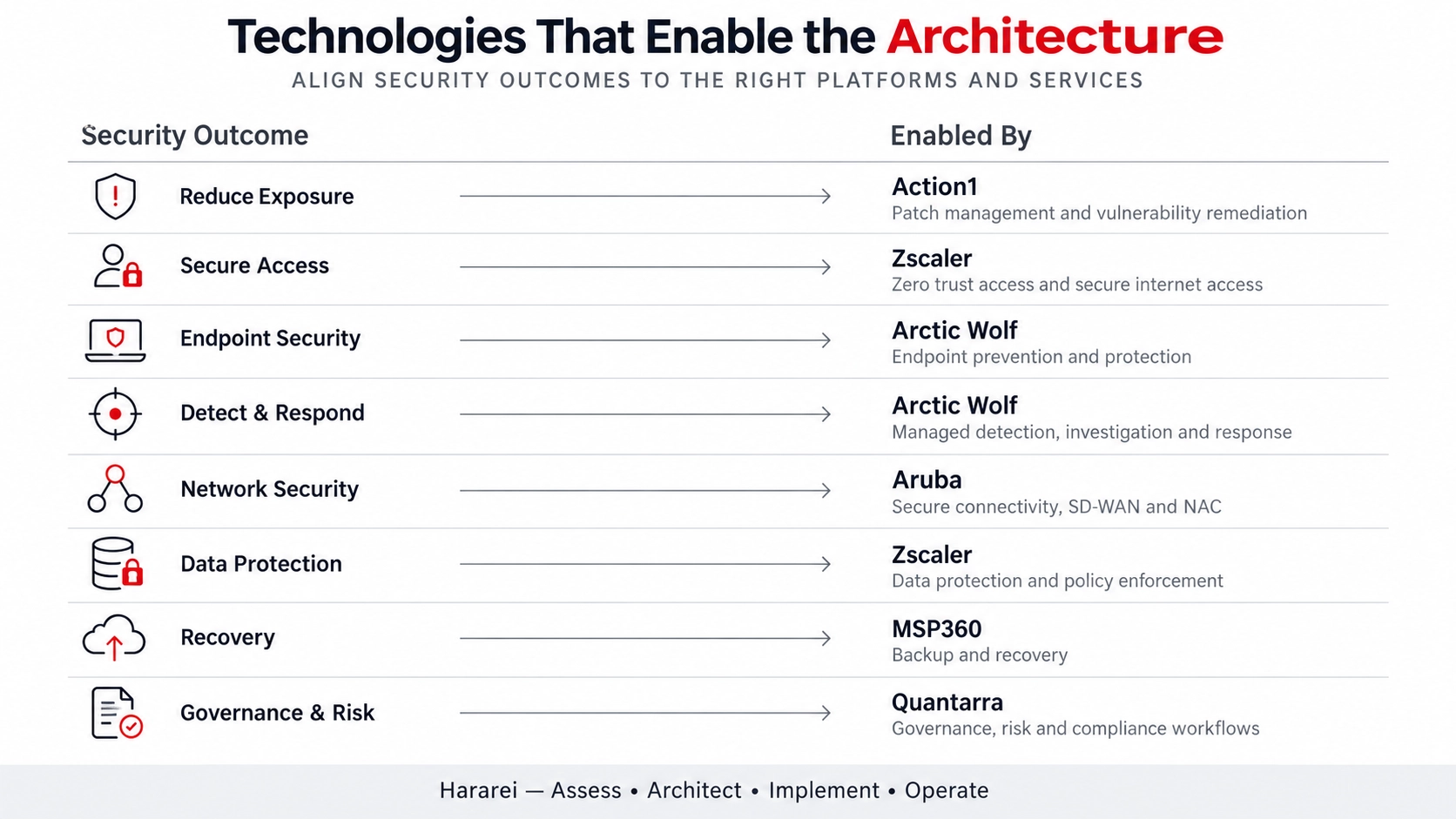
Hararei works with a focused set of cybersecurity and infrastructure platforms that can be combined to support the security architecture described above. Technology selection depends on the customer’s existing environment, risk priorities, operating model and target architecture rather than forcing every requirement into a single platform.
Cloud-delivered security for Secure Web Gateway, Zero Trust Network Access, data protection, cloud security and broader Zero Trust security controls.
Endpoint security, endpoint prevention and detection, together with Managed Detection and Response and broader security operations.
Cloud-native endpoint management and patch and vulnerability remediation to continuously reduce exploitable weaknesses across endpoints and servers.
Secure SD-WAN, encrypted overlay networks, segmentation and Network Access Control for secure, resilient branch and enterprise connectivity.
Flexible backup and recovery capabilities that support data protection, ransomware recovery and broader disaster recovery and resilience strategies.
A modern GRC platform for continuous governance, risk and compliance, including control monitoring, evidence collection, audit readiness and continuous compliance management.
These platforms are used as components of the wider security architecture, with Hararei providing the advisory, design, implementation and operational expertise needed to integrate them effectively.
Hararei brings together strategy, architecture, implementation and operational experience to help customers improve security without creating unnecessary complexity. Our approach is shaped by experience on both the customer and service-provider sides of large enterprise environments.
We start with the security outcome and target architecture, then select the technologies needed to support it.
Our team understands the operational, commercial and governance challenges involved in securing complex enterprise environments.
We work across multiple security and infrastructure platforms so recommendations can be based on the customer’s requirements rather than a single-vendor agenda.
Hararei can support the full lifecycle from assessment and design through implementation, migration, optimization and ongoing operational support.
The result is a security architecture that is not only stronger, but also more practical to operate, support and evolve over time.
Whether you are addressing a specific security gap, modernizing an existing environment or planning a broader transformation, Hararei can help assess the current state, define the target architecture and support implementation and ongoing improvement.
Contact Us Please contact Hararei for an in-depth discussion on using any of our Cloud or Cybersecurity products or services