Network Access Control for Secure, Policy-Driven Infrastructure
Control who and what can access your network
Hararei helps organisations deploy Aruba ClearPass to identify unmanaged devices, enforce role-based access, validate endpoint posture, and support Zero Trust across wired, wireless, guest, BYOD, IoT and branch environments.
Implementing Network Access Control does not require ripping out existing infrastructure or cause major disruption to users.
Most organisations have no reliable way to control who and what is connecting to their network. Corporate laptops, personal devices, IoT equipment, contractors, and guests often receive the same level of trust, increasing the risk of unauthorised access and lateral movement. Network Access Control provides the visibility and policy enforcement needed to ensure every device receives only the access it requires.
Why Network Access Control Now?
Modern networks are no longer limited to managed laptops and known users. Branch offices, wireless networks, guest access, BYOD, contractors, IoT and unmanaged devices all create new access risks that traditional perimeter controls were not designed to handle.
Unmanaged devices are everywhere
Printers, cameras, scanners, badge readers, personal devices and IoT equipment often connect to the network without the same controls applied to corporate endpoints.
Access needs to be verified
Users and devices should not gain network access simply because they know a password or can connect to a port or wireless network.
Segmentation reduces risk
Network Access Control helps place users, guests, contractors and devices into the right access zones, limiting movement if an account or device is compromised.
Posture matters
Corporate devices can be checked for security posture before they are granted access, including controls such as endpoint protection, firewall status and patch compliance.
Compliance requires evidence
Regulated organisations need to show who accessed the network, from which device, under what policy, and whether access controls were consistently enforced.
ZTNA does not replace NAC
ZTNA controls access to private applications. NAC controls access to the network itself, especially across campus, branch, wireless, guest and IoT environments.
Where Network Access Control Fits in a Zero Trust Architecture
Network Access Control (NAC) plays a distinct role in a modern security architecture. It helps determine who and what is allowed onto the network, under what conditions, and with what level of access. It works alongside ZTNA, Secure Web Gateway, endpoint security and other controls to reduce risk across campus, branch and hybrid environments.
In simple terms
NAC controls access to the network itself.
ZTNA controls access to private applications.
SWG / SASE secures internet and SaaS access.
Endpoint security helps detect and contain threats after access is granted.
Network Access Control (NAC)
NAC verifies users and devices before they join the network, applying role-based access policies across wired, wireless, guest, BYOD and IoT environments.
- Device visibility and profiling
- Authentication and role-based access
- Guest and contractor access control
- Segmentation and quarantine
Zero Trust Network Access (ZTNA)
ZTNA provides secure access to private applications without exposing the network, making it ideal for remote users, third parties and application-level access control.
- Application-level access control
- Remote access without traditional VPN exposure
- Identity and context-based access decisions
- Reduced lateral movement risk
Secure Web Gateway / SASE
SWG and broader SASE services protect internet and SaaS access, helping enforce web security, acceptable use, threat prevention and data protection policies.
- Web and SaaS traffic inspection
- Threat prevention and URL filtering
- Cloud-delivered policy enforcement
- Support for hybrid and mobile users
Endpoint Security & Device Posture
Endpoint protection, EDR, patching and posture tools provide important signals about device health. NAC can use these signals to help determine whether a device should be granted access, restricted or quarantined.
- Endpoint protection and EDR status
- Patch and compliance checks
- Firewall and device posture validation
- Improved enforcement decisions at access time
Identity, Segmentation & Policy Enforcement
NAC becomes even more effective when integrated with identity systems, switching and wireless infrastructure, firewalls and segmentation controls to create consistent access policies across the environment.
- Directory and identity integration
- Dynamic policy enforcement by user and device
- Segmentation for users, guests and IoT devices
- Support for Zero Trust architecture initiatives
The Practical Takeaway
NAC is not a replacement for ZTNA, Secure Web Gateway or endpoint security. It solves a different problem: controlling access to the network itself and applying the right level of access for users, devices and unmanaged endpoints. In practice, the strongest Zero Trust architectures use these controls together.
Common Network Access Control Use Cases
Network Access Control should do more than authenticate users onto the network. It should help enforce access policies for employees, guests, contractors, corporate devices and unmanaged endpoints across wired, wireless and branch environments.
Secure Employee Access Across Wired and Wireless Networks
Apply identity-based access controls to employees and trusted users across office, campus and branch environments, helping ensure the right users and devices receive the right level of access.
- Authenticate users and corporate devices before granting network access
- Apply role-based policies across wired and wireless networks
- Support 802.1X and other access control methods
- Restrict access based on user role, device type or location
Control Guest and Contractor Access
Provide internet and limited internal access to visitors, third parties and temporary users without exposing sensitive systems or relying on shared credentials.
- Provide separate guest access for visitors and contractors
- Apply time-limited or sponsor-approved access where needed
- Restrict guest traffic to internet-only or approved resources
- Reduce the risk of unmanaged third-party devices accessing sensitive networks
Enforce Posture for Corporate Endpoints
Use posture information to help determine whether corporate laptops and other managed endpoints should receive full access, restricted access or remediation access.
- Check endpoint posture before granting full access
- Validate controls such as endpoint protection, firewall status and patch compliance
- Place non-compliant devices into restricted or remediation access groups
- Support stronger enforcement for corporate-managed endpoints
Identify and Segment IoT and Unmanaged Devices
Gain visibility into printers, cameras, scanners, badge readers, medical devices, OT assets and other unmanaged endpoints, then place them into the appropriate access zones.
- Profile connected devices and identify unmanaged endpoints
- Assign devices to the correct network segment or policy group
- Restrict access to only the systems and services those devices require
- Reduce lateral movement risk from poorly secured devices
Support Branch and Campus Zero Trust Initiatives
Extend identity-based access policies beyond a single office to support distributed users, branch locations and campus environments as part of a broader Zero Trust strategy.
- Apply consistent access policies across multiple sites
- Support Zero Trust controls for campus and branch networks
- Improve segmentation between users, guests, devices and IoT assets
- Complement ZTNA, endpoint security and broader security controls
Improve Auditability and Access Governance
Strengthen visibility into who accessed the network, from which device and under what policy, helping support governance, audit and compliance requirements.
- Create clearer access policies for users, devices and third parties
- Maintain records of authentication, authorisation and policy decisions
- Support internal control, audit and regulatory reporting requirements
- Improve confidence in network access governance over time
Aruba ClearPass Components
Aruba ClearPass combines several capabilities to provide centralized Network Access Control across wired, wireless, guest, BYOD and unmanaged device environments. Together, these components help identify users and devices, evaluate their security posture, apply appropriate access policies and simplify secure onboarding.
Policy Manager
Provides the central policy and authentication engine for ClearPass, allowing access decisions to be based on user identity, device type, role, location, authentication method and other contextual information.
OnGuard
Evaluates endpoint security posture before or during network access, checking factors such as operating system status, endpoint protection, firewall configuration and other security requirements.
Onboard
Simplifies secure onboarding of employee-owned and other authorized devices by automating configuration and certificate provisioning for controlled network access.
Device Insight
Provides discovery, classification and profiling of connected devices, helping identify IoT, OT, unmanaged and other non-traditional endpoints that may not support conventional authentication methods.
Policy Enforcement and Endpoint Posture
Aruba ClearPass combines centralized policy enforcement with endpoint posture assessment to help determine whether users and devices should be granted full access, restricted access or remediation access.
ClearPass Policy Manager can make access decisions using factors such as user identity, device type, role, authentication method, location and other contextual information. This allows organisations to apply granular policies rather than relying on broad network trust.
For managed endpoints, ClearPass OnGuard can evaluate device health and security posture, including operating system status, endpoint protection, firewall configuration and other compliance requirements. Devices that do not meet policy can be restricted, quarantined or directed to remediation before receiving broader network access.
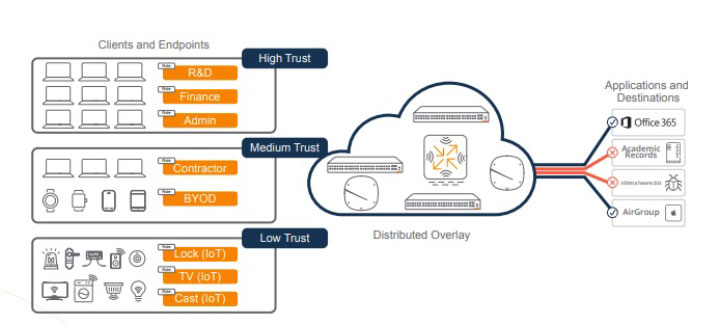

Centralized Access Policy Across the Network
ClearPass Policy Manager provides the central policy engine for authentication, authorization and role-based access control across wired, wireless and other network environments.
It supports standards-based access methods including RADIUS and TACACS+, together with device profiling, posture assessment, guest access, onboarding and other enforcement capabilities. Policies can be defined around users, devices and context, then applied consistently across the environment.
This centralized approach helps organisations simplify access policy, improve visibility and reduce inconsistencies that can arise when network access decisions are managed independently across multiple platforms and locations.
Works With Existing Network Infrastructure
Enterprise networks are rarely built entirely around a single vendor. ClearPass is designed to operate across heterogeneous environments, integrating with multi-vendor switching, wireless infrastructure, firewalls and identity systems.
For wired and wireless access, ClearPass can use standards-based 802.1X authentication where supported. It can also use MAC authentication for IoT and headless devices that may not support 802.1X, while OnConnect can provide an alternative enforcement method in wired environments where traditional RADIUS authentication cannot be deployed.
This flexibility allows organisations to introduce NAC without requiring a wholesale replacement of existing network infrastructure. Access controls can be introduced gradually, allowing visibility, profiling and policy enforcement to expand over time.
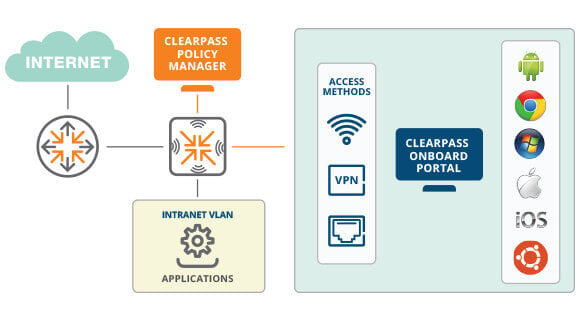
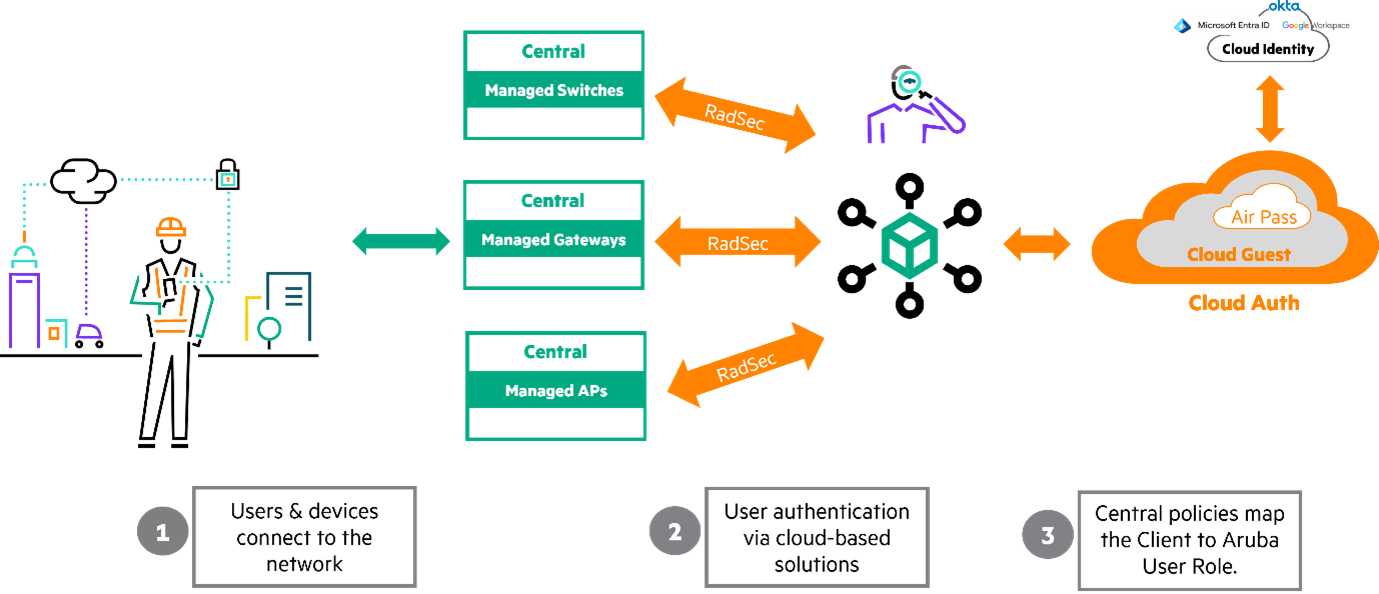
Hararei brings extensive experience designing and operating large-scale enterprise networks. We help organisations define access policies, integrate ClearPass with existing infrastructure and develop a phased deployment strategy that improves security while minimizing disruption to users and business operations.
ClearPass Policy Manager Datasheet
Support Compliance and Access Governance
Network Access Control can play an important role in strengthening internal access controls, improving visibility over connected devices and supporting audit requirements. By applying identity-based policies to users and devices, organisations can move away from broad network trust and towards more consistent, policy-driven access decisions.
Strengthen Access Control
NAC helps ensure that users and devices are authenticated before joining the network and can be assigned access based on role, device type, location or other policy criteria.
- Support identity-based access to wired and wireless networks
- Apply different policies to employees, guests, contractors and devices
- Reduce reliance on broad network trust and shared access methods
- Limit access to the systems and services each user or device requires
Improve Visibility and Auditability
NAC can provide clearer visibility into who connected to the network, from which device, and under what policy, helping security and audit teams build a more reliable picture of access activity.
- Track authentication and authorisation activity
- Maintain records of access decisions and policy enforcement
- Improve visibility into unmanaged and non-corporate devices
- Support investigations, reporting and internal audit processes
Support Segmentation of Sensitive Environments
For organisations with sensitive systems, regulated data or operational technology, NAC can help place users and devices into the appropriate access zones and reduce unnecessary exposure.
- Separate guest, employee, contractor and device traffic
- Restrict IoT and unmanaged devices to approved network segments
- Support access control for sensitive business systems and environments
- Reduce the risk of uncontrolled lateral movement across the network
Reinforce Policy and Governance Objectives
While NAC is not a compliance programme in itself, it can help organisations enforce access policies more consistently and demonstrate stronger governance over network access.
- Support policy-based access decisions rather than informal exceptions
- Provide stronger control over guest, BYOD and third-party access
- Help align network access with broader security and Zero Trust initiatives
- Contribute to a stronger overall control environment for regulated organisations
A practical control for regulated and security-conscious environments
Whether the priority is reducing exposure from unmanaged devices, improving guest access governance, or strengthening internal control over network access, NAC can provide a practical foundation for more disciplined access management across campus, branch and hybrid environments.
Why Work With Hararei for Network Access Control
Network Access Control projects are rarely just about enabling a product feature. They involve policy design, user experience, infrastructure integration, endpoint visibility and careful rollout planning. Hararei helps organisations approach NAC as part of a broader security and Zero Trust strategy, rather than as a standalone technology deployment.
Architecture-First Approach
We start by understanding your users, devices, access requirements and security objectives, then design the access model, policy structure and deployment approach to fit your environment.
Experience Across Complex Environments
NAC often needs to integrate with switching, wireless, identity, endpoint and security platforms. Hararei works across mixed environments and helps align NAC with the wider network and security stack.
Phased Deployment to Reduce Risk
We help organisations move from visibility and profiling to policy enforcement in a controlled way, reducing the risk of user disruption and avoiding overly aggressive access changes on day one.
Focus on Operational Practicality
Successful NAC deployments must work in the real world. We take into account guest access, contractors, legacy devices, IoT endpoints, support processes and the operational realities of running access controls at scale.
Aligned to Zero Trust Initiatives
NAC should not sit in isolation. Hararei helps position Network Access Control alongside ZTNA, Secure Web Gateway, endpoint security and segmentation initiatives to support a more coherent Zero Trust architecture.
From Strategy Through Implementation
Whether you are evaluating NAC for the first time, planning an Aruba ClearPass rollout or looking to improve an existing deployment, Hararei can support assessment, design, implementation and optimisation.
Network Access Control FAQ
Network Access Control touches many parts of the IT environment, including identity, endpoint security, wired and wireless infrastructure, guest access, IoT and Zero Trust architecture. The questions below address some of the most common considerations around NAC, including how it works, where it fits alongside ZTNA, how device posture and segmentation are enforced, and what organizations should consider when planning a deployment.
1. What is Network Access Control (NAC)?
Network Access Control helps organizations identify users and devices connecting to wired and wireless networks and determine what level of access they should receive. NAC can apply policies based on factors such as user identity, device type, security posture, role and location.
2. Why is Network Access Control still important in a Zero Trust architecture?
Zero Trust Network Access primarily controls access to private applications, while NAC controls access to the network itself. NAC remains important for campus, branch, wireless, guest, BYOD, IoT and other environments where devices must first be identified and evaluated before being allowed onto the network.
3. Does ZTNA replace Network Access Control?
No. ZTNA and NAC solve different problems. ZTNA provides application-level access without exposing the underlying network, while NAC determines whether a user or device should be permitted onto a network and what network resources it should be able to reach. In many Zero Trust architectures, the two technologies work together.
4. Can NAC identify unmanaged and IoT devices?
Yes. NAC platforms such as Aruba ClearPass can discover and profile connected devices, helping identify printers, cameras, scanners, badge readers, medical devices, OT equipment and other endpoints that may not support conventional authentication methods.
5. Can NAC check whether a device is secure before allowing access?
Yes. Endpoint posture assessment can evaluate whether a managed device meets defined security requirements before providing full network access. Depending on the policy, checks can include operating system status, endpoint protection, firewall configuration, patch compliance and other security attributes.
6. What happens if a device fails a security posture check?
A device that does not meet policy does not necessarily have to be completely disconnected. NAC can restrict its access, place it into a quarantine or remediation network, or provide limited connectivity until the security issue has been corrected.
7. Can NAC be used for guest and contractor access?
Yes. NAC can provide separate access policies for visitors, contractors and other third parties. Access can be limited to the internet or approved internal resources and may include controls such as sponsor approval, time-limited access and separate network segmentation.
8. Does implementing NAC require replacing existing switches and wireless infrastructure?
Not necessarily. Aruba ClearPass is designed to operate across heterogeneous network environments and can integrate with multi-vendor switching, wireless, firewall and identity platforms. This allows many organizations to introduce NAC without undertaking a wholesale replacement of their existing network infrastructure.
9. How does NAC work with devices that do not support 802.1X?
While 802.1X provides standards-based authentication for many wired and wireless devices, some IoT and headless devices cannot support it. NAC can use alternatives such as MAC-based authentication and device profiling, while ClearPass OnConnect can provide additional enforcement options in certain wired environments.
10. How does NAC help with network segmentation?
NAC can dynamically assign users and devices to the appropriate network segment or policy group based on identity, device type, role, posture and other context. This helps separate employees, guests, contractors, IoT devices and sensitive systems and reduces unnecessary opportunities for lateral movement.
11. Can Network Access Control help with compliance and audit requirements?
Yes. NAC can improve visibility into who connected to the network, from which device, under what policy and what access was granted. These records can support access governance, investigations, internal audits and regulatory reporting, although NAC itself is not a complete compliance program.
12. How should an organization introduce Network Access Control?
A phased deployment is usually the safest approach. Organizations can begin with device discovery, profiling and visibility before progressively introducing authentication, posture assessment, segmentation and enforcement. Hararei helps customers define access policies, integrate NAC with existing infrastructure and roll out controls in a way that improves security without creating unnecessary disruption for users.
A Practical Approach to NAC Adoption
We help organisations identify where NAC will deliver the most value, prioritise the right use cases, and roll out controls in a way that improves security without creating unnecessary friction for users or support teams.
Not Sure If NAC Is Right For Your Environment?
Hararei can assess your current network access controls, identify unmanaged devices, and help determine whether Aruba ClearPass is the right solution for your organisation.
Contact Us Please contact Hararei for an in-depth discussion on using any of our Cloud or Cybersecurity products or services