Disaster Recovery to the Cloud
Designing Cloud Disaster Recovery Around Recovery Objectives

A robust disaster recovery architecture starts with the business requirements for each application rather than with a particular cloud service or replication technology. Recovery Time Objective (RTO) defines how quickly a service must be restored following an outage, while Recovery Point Objective (RPO) determines how much data loss the organization can tolerate. Different applications will usually require different recovery tiers, and the most cost-effective DR strategy is therefore often a combination of architectures rather than a single approach applied across the entire environment.
Application recovery also depends on more than restoring virtual machines. A complete DR design must account for application dependencies, databases, identity services, DNS, network connectivity, security controls, certificates, external integrations and the order in which components must be recovered. Infrastructure as Code and automated configuration can be used to recreate cloud resources consistently, while replication technologies maintain application data at a frequency appropriate to the required RPO.
The recovery process itself should be designed and tested as an operational workflow. This includes defining failover and failback procedures, validating backup integrity, testing application consistency, confirming network and security dependencies, and regularly exercising recovery scenarios. Monitoring replication status and recovery readiness is equally important: a DR environment that has never been successfully tested cannot be assumed to be recoverable.
AWS provides multiple architectural patterns that allow the amount of continuously running infrastructure, and therefore cost, to be aligned with the required recovery objectives. These range from Backup and Restore, where infrastructure is recreated following an event, through Pilot Light and Warm Standby architectures, to multi-site Active/Active designs capable of supporting very low recovery times.
What a Cloud DR Strategy Must Address
A successful cloud disaster recovery strategy must address more than the replication of servers and data. Applications depend on networks, identity services, DNS, security controls, databases, certificates, external services and other components that must all be available in the correct sequence for recovery to succeed.
Key considerations include:
- Application Dependencies: Identify the systems, services and integrations each application requires, including databases, identity providers, APIs and shared infrastructure.
- Data Protection and Consistency: Determine how data is replicated, how frequently it must be protected, and whether application-consistent recovery is required to meet the defined RPO.
- Network Connectivity: Plan how users, branches, data centers and cloud environments will connect to recovered services during a disaster.
- Identity and Access: Ensure authentication, authorization and privileged access services remain available during recovery.
- DNS and Traffic Management: Define how traffic will be redirected to recovery environments and how failover will be controlled.
- Security Controls: Recreate or maintain firewall policies, segmentation, encryption, certificates, logging and other security services within the recovery environment.
- Recovery Orchestration: Define the sequence in which infrastructure, applications and dependent services must be restored or activated.
- Failback: Plan how services and data will be returned to the primary environment once normal operations have been restored.
- Testing and Validation: Regularly test recovery procedures, application functionality and dependency chains to confirm that recovery objectives can actually be achieved.
The objective is not simply to create a second copy of the production environment. It is to design a recovery architecture in which all of the components required to restore business services are understood, protected and capable of being brought online within the required recovery objectives.
Using AWS Cloud for Cost-Optimized Disaster Recovery
Traditional disaster recovery environments can be expensive to build and maintain because they often require duplicate infrastructure, secondary facilities and reserved capacity that may remain largely unused until a disaster occurs. As a result, organizations sometimes compromise the effectiveness of their DR environment by reducing capacity, limiting redundancy or accepting recovery processes that are slower and more manual than the business would ideally require.
AWS changes that economic model by allowing recovery infrastructure to be matched more closely to the organization’s risk tolerance, recovery objectives and budget. Instead of maintaining a full duplicate production environment at all times, customers can choose how much infrastructure remains continuously active and how much is created, started or scaled only when a recovery event occurs. This makes it possible to balance cost against Recovery Time Objective (RTO), Recovery Point Objective (RPO) and business criticality.
For less critical workloads, Backup and Restore or Pilot Light architectures can minimize ongoing cost while still providing a defined recovery capability. Applications requiring faster recovery can use Warm Standby, while highly critical services may justify Multi-Site or Active/Active architectures. Rather than applying the same expensive DR design to every workload, AWS allows organizations to establish different recovery tiers and invest most heavily where an outage would create the greatest business risk.
The result is not necessarily the lowest-cost DR environment, but a more economically efficient one: recovery capability can be aligned with the value and risk of each workload. In many cases, this can provide stronger and more regularly testable disaster recovery than traditional secondary-site approaches that have been constrained by the cost of maintaining duplicate infrastructure.
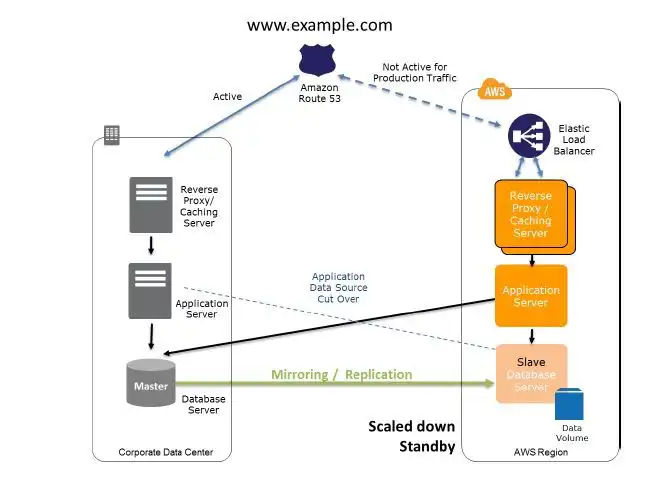
AWS supports several disaster recovery architectures, each offering a different balance of cost, recovery speed and operational complexity. The following strategies provide a framework for selecting the approach that best aligns with the business impact of an outage, required RTO and RPO, and the organization’s risk and cost appetite.
- Backup/Restore - backup critical data and applications to the Cloud and Restore when there is an event
- Pilot Light - backup/restore, plus some critical infrastructure already alive in the Cloud
- Warm Standby - backup/restore, plus a pre-configured infrastructure, but with minimal active infrastructure
- Multisite - Active/Active infrastructure across traditional Data Centers and Cloud Regions
Ready to strengthen your disaster recovery strategy? Hararei can help you assess application criticality, define appropriate RTO and RPO targets, and design an AWS-based recovery architecture that balances resilience, recovery performance and cost. Contact us to discuss the right approach for your environment.
Contact Us Please contact Hararei for an in-depth discussion on using any of our Cloud or Cybersecurity products or services