Zero Trust Network Access Solutions
Provide Secure Identified Access To Your Private Applications
There is no single 'best' Zero Trust Network Access platform. The right choice depends on your existing infrastructure, security strategy, operational requirements and long-term architecture. Hararei helps organisations evaluate and implement the platform best suited to their environment.
ZTNA, or Zero Trust Network Access, provides secure, identity-based access to private applications and data for users and devices by verifying their identity and device health before granting temporary, granular access to only the necessary resources, rather than broad network access. It replaces traditional VPNs by creating a "software-defined perimeter" (SDP) for each user and application, significantly reducing the attack surface and improving security for modern, cloud-first organizations.
Zscaler Private Access (ZPA)
A mature, cloud-native Zero Trust Network Access platform designed to provide secure, identity-based access to private applications without exposing the corporate network.
Well Suited To
- Large enterprise organisations
- Highly regulated industries
- Global and distributed workforces
- Complex hybrid application environments
Key Strengths
- Enterprise-scale policy management
- Comprehensive application segmentation
- Continuous trust verification
- Part of the Zscaler Zero Trust Exchange platform
HPE Aruba Networking SSE
A cloud-delivered Security Service Edge platform incorporating Zero Trust Network Access, designed to integrate closely with Aruba's networking portfolio and SASE architecture.
Well Suited To
- Existing Aruba customers
- EdgeConnect SD-WAN deployments
- Branch modernisation projects
- Single-vendor networking strategies
Key Strengths
- Integrated networking and security
- Native SASE architecture
- Seamless EdgeConnect integration
- Consistent branch and remote access policies
Twingate
A lightweight Zero Trust access platform that delivers secure application connectivity with minimal infrastructure, making it ideal for organisations seeking a rapid transition from traditional VPNs.
Well Suited To
- Small and mid-sized enterprises
- Rapid VPN replacement
- Mergers and acquisitions
- Third-party and contractor access
Key Strengths
- Fast deployment
- Minimal operational overhead
- Simple administration
- Strong identity-based application access
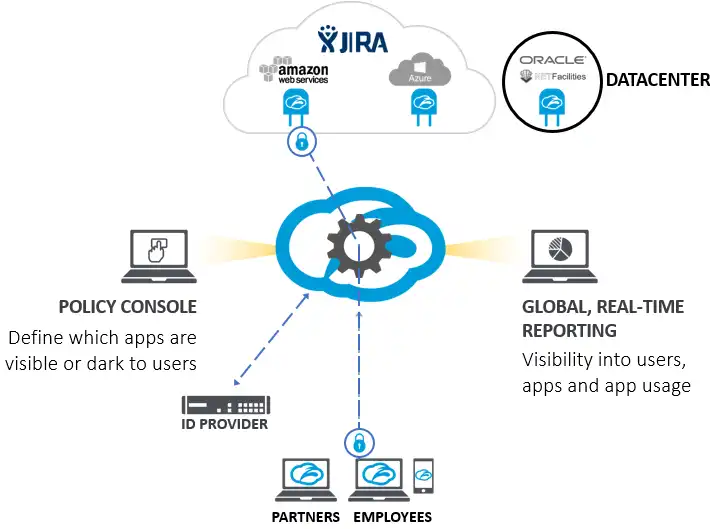
Zscaler Private Access (ZPA) is a next-generation, non-VPN based solution for secure remote access. The patented Zscaler Private Access solution works by abstracting the private, internal application from the network on which it resides, providing access from authorized users to specific applications via encrypted, per–session microtunnels that are created upon demand.
The end user is never directly connected to the application, nor is the user connected to the network on which the application resides. ZPA instead delivers functionality similar to a forward and a reverse proxy acting together. This ensure that networks and applications cannot be infected or exploited by open network tunnels.
Redefining Private Application Access
- Access to private applications, whether they are in your Data Center or a private segment of a Cloud Provider, no longer requires access to a public network, or use of a VPN. By hiding the public attack surface, the risk of cyber attack is dramatically decreased, and the possibility of DDOS attacks against private applications is removed.
- Inside-out connections ensure applications are invisible to unauthorized users and are never exposed to the Internet, preventing DDOS attacks
- Application segmentation, without network segmentation, connects users to specific applications and limits lateral movement
- The Internet becomes the new secure network via end-to-end encrypted TLS tunnels
Zscaler is a platform, which means Zero Trust can be combined with other security functions such as Data Loss Prevention, Cloud Application Access, Application Bandwidth Management, and Secure Web Gateway in a single platform. This platform can then be used for management and complicance reporting and security monitoring. For an example of a holistic platform approach to application, see our Zscaler for SAP page.
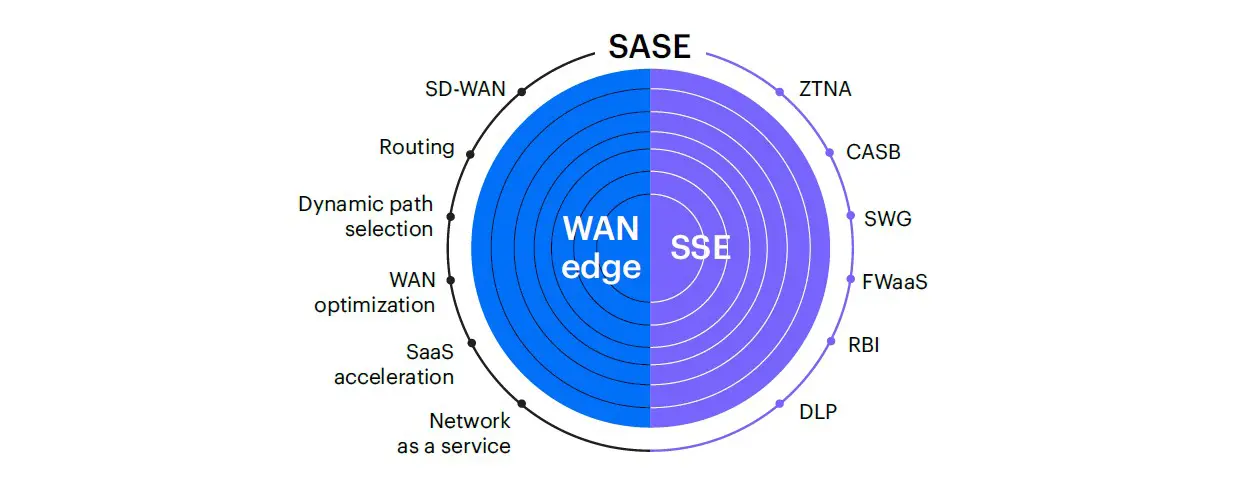
Zero Trust Network Access is one component of a Secure Access Service Edge (SASE) architecture.
Zero Trust Network Access FAQ
Zero Trust Network Access can significantly reduce the risks associated with traditional remote access, but the technology is often misunderstood or treated simply as a replacement for VPN. The questions below address some of the most common considerations around ZTNA, including how it works, where it fits within a broader Zero Trust strategy, how it differs from traditional network access, and what organizations should consider when planning a migration.
1. What is Zero Trust Network Access (ZTNA)?
ZTNA provides secure access to private applications based on user identity, device posture, policy and other contextual factors. Instead of connecting a user to an entire network, ZTNA grants access only to the specific applications and resources that the user is authorized to use.
2. How is ZTNA different from a traditional VPN?
A traditional VPN typically extends the corporate network to a remote device, often giving the user broad network-level connectivity. ZTNA takes an application-centric approach, establishing access only between an authorized user and an approved application. This reduces network exposure and limits opportunities for lateral movement.
3. Can ZTNA completely replace a VPN?
For many user-to-application access requirements, yes. However, some organizations have legacy applications, network protocols, administrative requirements or machine-to-machine connectivity that may still require traditional network access. A phased migration is often the safest approach.
4. Does ZTNA only work for remote users?
No. Zero Trust access policies can be applied regardless of whether a user is working from home, a branch office, headquarters or another location. The objective is to make access decisions based on identity and context rather than assuming a user is trusted because they are connected to the corporate network.
5. How does ZTNA reduce the attack surface?
ZTNA can prevent private applications from being directly exposed to the internet and avoids providing users with broad network connectivity. Authorized users are connected to specific applications rather than the underlying network, making internal systems more difficult for attackers to discover and reducing potential paths for lateral movement.
6. Does ZTNA provide network segmentation?
ZTNA provides application-level segmentation rather than relying solely on traditional network segmentation. Policies can determine which users, groups or devices may access individual applications without requiring every access policy to be implemented through VLANs, firewall rules or separate network segments.
7. Can ZTNA check whether a device is secure before allowing access?
Yes. Depending on the platform, access decisions can incorporate device posture information such as operating system, endpoint protection status, device management, certificates and other security attributes. Access can then be allowed, restricted or denied based on the organization's policy.
8. Can ZTNA be used for contractors and third parties?
Yes. Third-party access is one of the strongest ZTNA use cases because contractors, suppliers and partners can be given access to specific applications without being placed directly onto the corporate network. This can significantly reduce the risk associated with traditional third-party VPN access.
9. What happens if an employee's account is compromised?
ZTNA substantially limits what possession of a username and password alone can provide. Access policies can require multifactor authentication, trusted devices, acceptable device posture and other contextual conditions. Because users are also restricted to authorized applications, a compromised account does not automatically provide unrestricted access to the internal network.
10. Is ZTNA the same as SASE?
No. ZTNA is one capability within a broader Secure Access Service Edge architecture. ZTNA primarily protects access to private applications, while SASE can combine private application access with capabilities such as Secure Web Gateway, cloud firewall, CASB, data protection and other cloud-delivered security services.
11. Do we need to move our applications to the cloud before adopting ZTNA?
No. ZTNA can provide access to applications hosted in traditional data centers, private clouds, public cloud environments and other private infrastructure. This makes it particularly useful during cloud migration or in multi-cloud operations, when applications may be distributed across several different environments.
12. How should an organization choose a ZTNA platform?
There is no single platform that is right for every organization. The decision should consider existing identity and endpoint technologies, application architecture, legacy access requirements, user locations, third-party access, security requirements, operational capabilities and the organization's longer-term SASE and Zero Trust strategy. Hararei helps customers evaluate these requirements and select an architecture appropriate to their environment.
Why Hararei for Zero Trust Network Access?
Implementing Zero Trust Network Access is not simply a matter of replacing a VPN client. The design must account for application architecture, user identity, device posture, third-party access, legacy protocols, network dependencies and the organization's broader security strategy.
Hararei helps organizations evaluate and implement ZTNA based on their actual environment rather than forcing every requirement into a single product architecture. We assess existing access patterns, identify applications and users suitable for migration, and help define a practical path from network-level access toward application-level Zero Trust access.
Our experience spans networking, cybersecurity, cloud, identity and endpoint technologies, allowing us to address the dependencies that often determine whether a ZTNA deployment succeeds in practice.
From initial assessment and platform selection through architecture, implementation, migration and ongoing optimization, Hararei provides the technical and operational expertise needed to make Zero Trust access secure, manageable and sustainable.
Contact Us Please contact Hararei for an in-depth discussion on using any of our Cloud or Cybersecurity products or services