
Many enterprise networks were designed around a world in which users worked from fixed locations, applications lived in centralized data centers, and private WAN circuits connected branches back to headquarters. That operating model has changed.
Applications now span SaaS, public cloud, private cloud and traditional data centers. Users connect from branches, homes and remote locations, while security policy must follow users and applications wherever they are. At the same time, organizations are under pressure to improve resilience, simplify operations and reduce dependence on expensive or inflexible network services.
Legacy network architectures can struggle to support this environment. Traffic is often backhauled unnecessarily, branch infrastructure becomes increasingly complex, visibility is fragmented across multiple tools, and changes can require significant operational effort.
Network transformation is the process of redesigning connectivity, security and operations around the way the business works today — rather than continuing to extend an architecture built for an earlier generation of IT.
SD-WAN is an important part of modern network architecture, but network transformation is broader than replacing legacy WAN circuits or introducing a new edge platform.
Effective transformation considers how branches, users, data centers, cloud platforms and SaaS applications should connect, where security controls should be applied, how traffic should be routed, and how the environment will be managed and monitored over time.
This can include WAN modernization, local internet breakout, cloud-delivered security, zero trust access, hybrid and multi-cloud connectivity, segmentation, resilient transport design, centralized management and improved network and security visibility.
The objective is to create a network that is simpler to operate, more resilient, more secure and better aligned with the applications and users it needs to support.
Traditional enterprise networks were built by adding dedicated technologies over time to solve individual connectivity, security and performance requirements. Branch routers, firewalls, WAN optimization appliances, VPN gateways and private circuits were often introduced separately, each with its own configuration, management platform and operational dependencies. As cloud applications, internet access and new security requirements were layered onto this model, the network became increasingly difficult to operate as a single, coherent architecture.
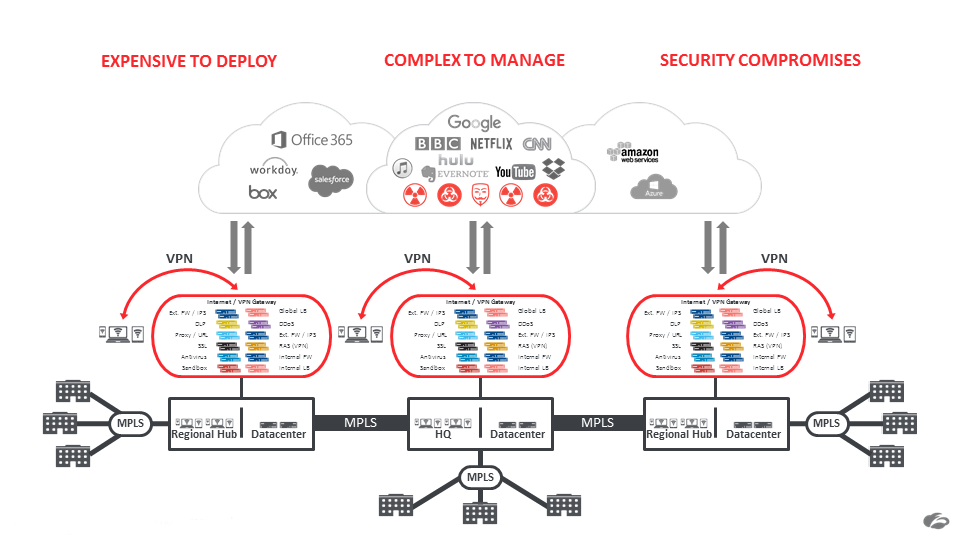
A successful network transformation should improve more than connectivity. It should simplify how users, branches, data centers and cloud environments connect, while improving security, resilience, visibility and operational control.

With a Secure Services Edge (SSE, such as Zscaler Internet Access) protecting all your web traffic, a cost effective and secure SD-WAN solution with local breakout is now possible. Aruba offers a high-performance SD-WAN solution that securely connects users to applications using any combination of connectivity (see below diagram).
With greater reliance on the Internet, the opportunity to achieve "cloud speed" is better served by integrating broadband services into the WAN transport mix. Aruba SD-WAN solutions enable enterprises to dramatically reduce the cost and complexity of building a WAN by leveraging broadband to connect users to applications. By empowering customers to use broadband connections to augment or replace their current MPLS networks, Aruba improves the user experience, increases application performance, and significantly reduces capital and operational expenses by up to 90%.
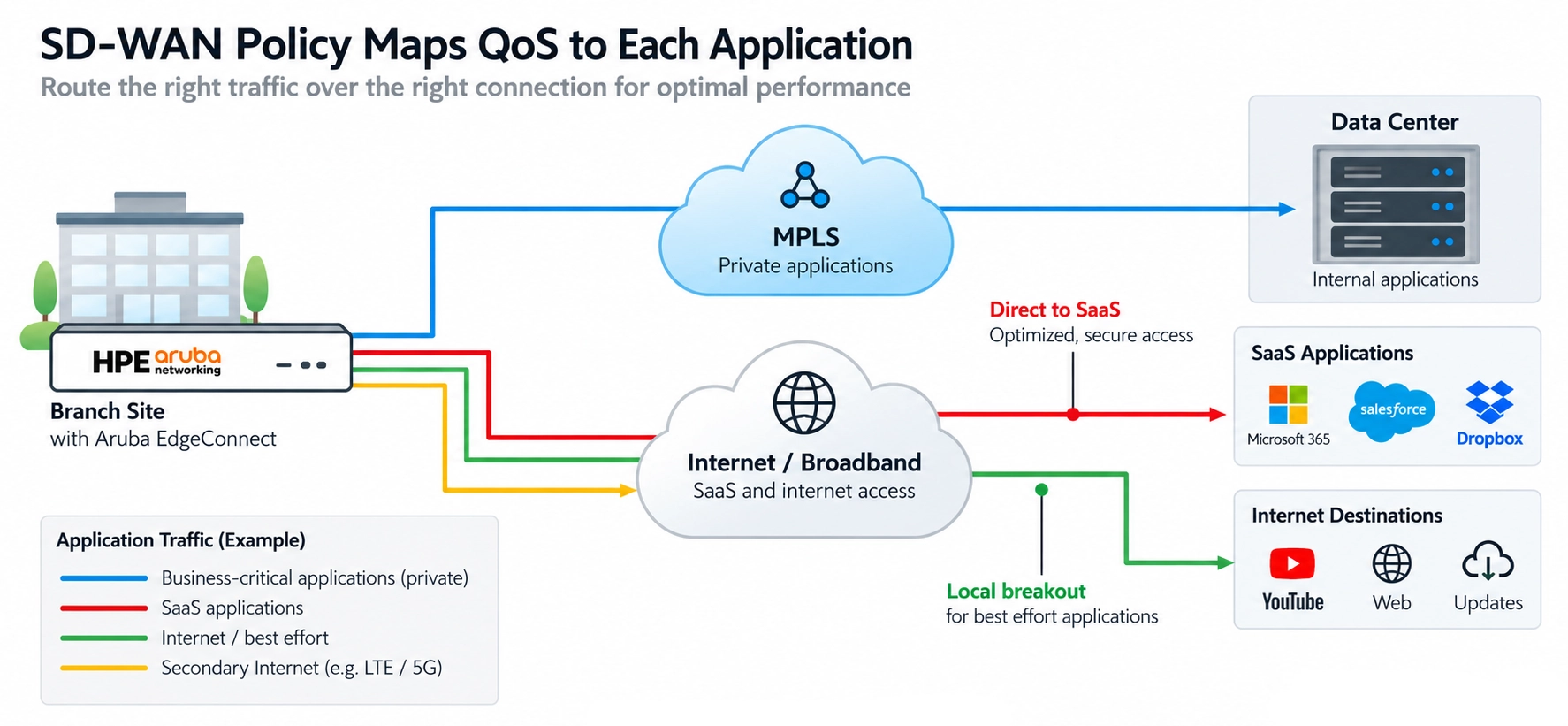
Aruba EdgeConnect provides secure and reliable virtual network overlays to connect users to applications with the flexibility to use any combination of transport technologies without compromising network or application performance.
Thin Branch — The combination of Zscaler and Aruba EdgeConnect SD-WAN greatly simplifies and reduces the amount of hardware in the branch office. Zscaler provides the Internet Gateway capabilities (firewall, proxy, web filtering, DLP, sandboxing, etc.) as a Cloud service, and Aruba‘s on-premises solution replaces the edge routers and WAN optimization appliances.
It is the combination of Cloud-based security and SD-WAN that provides improved agility and security, increased application performance, and significant reduction in capital and operational expenses. Leveraging Zscaler and Aruba SD-WAN will allow your organization to operate at Cloud speed, anywhere your users are located.
Hararei is a Cloud Generation solutions provider committed to helping clients prepare for, adopt and deploy the latest generation of applications and IT infrastructure in public cloud environments.
Contact Us Please contact Hararei for an in-depth discussion on using any of our Cloud or Cybersecurity products or services